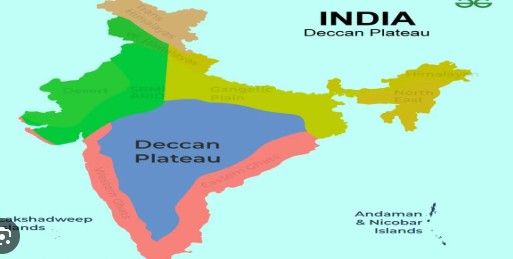
When the Persians and Greeks traveled to the Indus basin, they pronounced Sindh as ‘Hind‘; And as the word ‘isthan’ (place) was difficult for them to pronounce, they used to pronounce it simply ‘stan’. This is how the term ‘Hindustan’ originated; Which means, the abode of the inhabitants of Simba. They used to address the inhabitants of this region as ‘Hindus’. Their religion was called ‘Hindukia’ or ‘Hindudharma’ and its followers as ‘Hindusi’ or ‘Hinduki’. ‘Hindus’ or ‘Hindu’ refers to a tribe as a whole.(Geographical location of India in the light of history)
But the English changed Hind to pronounce IND; And adds relative index (IA) at the end. As a result the word INDIA was born..
5. The era of compilation of Hindu scriptures
After arriving in India, the Arthurs engaged in hostilities with the local inhabitants.
Then their scholars and scholars concentrated on compiling and writing various books. For over 1,000 years, the compilation of the basic works of Hinduism continued.
The classification of collections of this period was as follows
First Age: In the initial phase, the scholars of the time completed the work of composing the four Vedas. The word ‘Veda’ is a Sanskrit word meaning knowledge and learning.
Second Age: Geographical location of India in the light of history.
Age of Hindu Philosophers. During this time a group of Hindu philosophers were engaged in writing the Upanishads. It was basically a collection of philosophies of the Vedas. The Upanishads contain the basic concepts of Tasawwuf or Sufism.Geographical location of India in the light of history.
Professor Rues (Royec) said, ‘All the rules of Sufism are compiled in these books.’ Similarly, Aryan civilization and literature were also highlighted in the Upanishads.
https://ebooks.inflibnet.ac.in/icp01/chapter/geographical-factors-in-indian-history/
Third Age:
The age of Hindu monks, who prepared a compilation of Hindu rituals. There they compiled the principles of purity, worship, transactions, relationships, marital ties, separation and other principles in Hinduism..
These religious people rely on the quotations of their saints, tapas and pandits for these compilations. As a result of their efforts, books called Smriti saw the light and their number exceeded 50. Manusmriti is particularly notable among these.
Fourth Age: As a result of the intermingling of the Aryans with the inhabitants of India, the Aryadevatas began to be forgotten. Aryas worshiped Indra as the god of thunder, Agni as the god of fire, Aruna as the god of sky and Uja as the god of morning. Later, Vishnu, the god of sustenance, and Shiva, the god of destruction, took their place. After that, these new gods and goddesses are praised by various people The series of essays is started. It is in this context that Purana texts are compiled. The word ‘Purana’ means, ancient stories and legends. In different parts of the book, the story of creation, resurrection and the time between the two Manus and the time between the two destructions of the universe are given. According to Hindu belief, this universe is imperishable. It is destroyed and created anew many times.Geographical location of India in the light of history.
The Fifth Age: ( Geographical location of India in the light of history. )
A Compilation of Texts Containing Descriptions of Battles. In these books, the discussion of the battles of the Aryan leaders and the stories of their victories in the war have been highlighted. These are known as Mahabharata, Gita and Ramayana. Historically, these books gained importance to Hindus and were considered as national books.Geographical location of India in the light of history. https://en.wikipedia.org/wiki/India
I will discuss these books in detail in the next chapter, Inshallah.